
U of M researchers studying ‘digital legacy planning’
Advertisement
Read this article for free:
or
Already have an account? Log in here »
We need your support!
Local journalism needs your support!
As we navigate through unprecedented times, our journalists are working harder than ever to bring you the latest local updates to keep you safe and informed.
Now, more than ever, we need your support.
Starting at $15.99 plus taxes every four weeks you can access your Brandon Sun online and full access to all content as it appears on our website.
Subscribe Nowor call circulation directly at (204) 727-0527.
Your pledge helps to ensure we provide the news that matters most to your community!
To continue reading, please subscribe:
Add Brandon Sun access to your Free Press subscription for only an additional
$1 for the first 4 weeks*
- Enjoy unlimited reading on brandonsun.com
- Read the Brandon Sun E-Edition, our digital replica newspaper
*Your next Free Press subscription payment will increase by $1.00 and you will be charged $20.95 plus GST for four weeks. After four weeks, your payment will increase to $24.95 plus GST every four weeks.
Read unlimited articles for free today:
or
Already have an account? Log in here »
WINNIPEG — A team of researchers at the University of Manitoba wants adults to take the cloud they leave behind into special consideration when they envision heaven and their afterlife.
Led by Cecile Latulipe, the new computer science department project has a self-imposed mandate to better understand and improve “digital legacy planning.”
“Western society is very good at avoiding death. We put our graveyards far away from our cities. We offload our caring of the dead to funeral homes and such,” graduate student researcher Simon Wermie said.
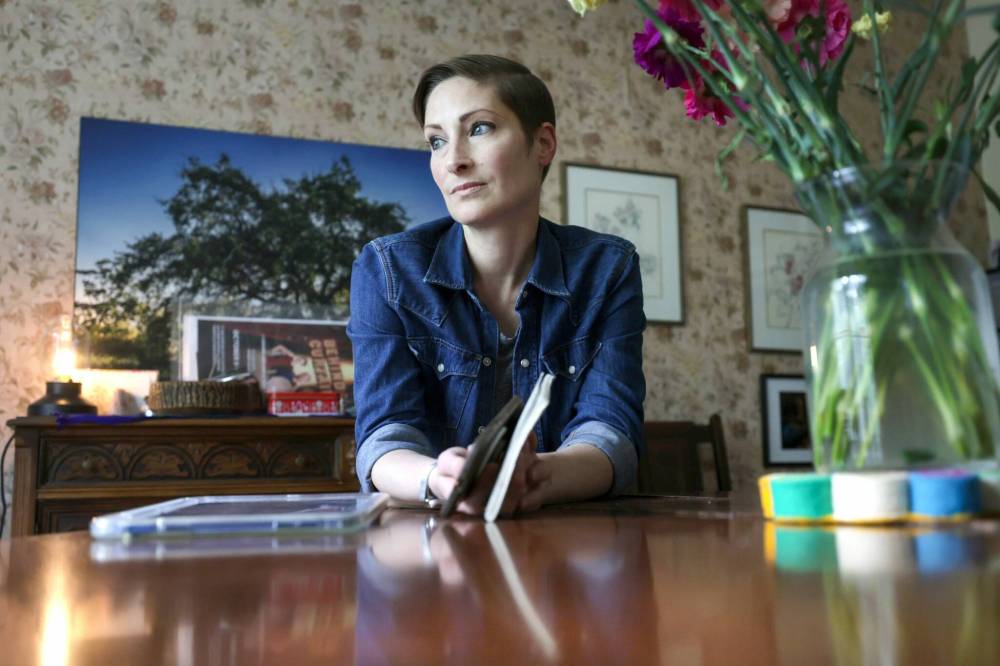
Catherine Wreford has a traditional will and is considering appointing an official ‘digital heir’ after learning about the U of M’s digital legacy research project. (Ruth Bonneville/Winnipeg Free Press)
“And so, it’s not surprising that the same would be true for our digital information.”
Wermie has spent the better part of the summer, and the last year, studying death in the digital era.
He is part of the Winnipeg-based trio that is actively recruiting Canadian residents aged 18 and up to complete an online survey about their virtual assets, spirituality and legacy planning — or lack thereof.
Participants are asked about the size of their digital footprint, from gaming to social media accounts, and if they’ve set up an inactive account manager on Google or another platform with a similar option.
An inactive account manager allows someone to choose ahead of time what happens to their data if they stop using their account.
The research team, including undergraduate researcher Lara De Leon, is also interested in perceptions about post-mortem privacy and the ethics of chatbots modelled after someone who has died using their texts and other personal information.
One section in the 32-question survey asks users if they would ever want to be represented by a “DeadBot,” a generative ghost, after they die “so that the loved ones you leave behind can chat with a representation of you.”
Latulipe is the principal investigator for the U of M Research Ethics Board-endorsed initiative that has collected about 100 submissions to date. The exploratory study launched at the end of May, although Latulipe and Wermie’s shared interest and collaboration predates the project.
The duo recently conducted interviews with 15 Canadian adults aged 55 and older to learn how they want their personal data to be dealt with after they die.
Only 40 per cent of respondents indicated they engaged in some form of digital legacy planning, such as drafting a physical list of passwords with instructions about what to do with their accounts or identifying the equivalent of a power of attorney for their Facebook page.
“Most people aren’t aware of this part of estate and legacy planning at this point,” Wermie said, citing their early findings and the caveat that recruits, who were alerted about the opportunity via social media, on-campus posters and older adult-focused mailing lists, likely signed up based on their interest in the topic.
Catherine Wreford, 46, is co-writing her obituary and creating an ever-growing catalogue of other content — both physical and digital — to leave her children and loved ones.
“I want to be remembered as somebody that fought until they couldn’t fight anymore, and that is what I’m doing right now,” the mother of two said.
In 2013, five weeks after giving birth to her daughter, Wreford was diagnosed with terminal brain cancer. She drafted a traditional will in the immediate aftermath, but she said her wishes have evolved alongside her relationship to social media.
The Winnipeg-based performer regularly records videos of herself and uploads the good, the bad and the ugly-crying. Sharing highlights and lowlights has become a form of community building and personal therapy, she said.
“People need to know that they’re not alone,” Wreford said as she described her motivation to post content about her diagnosis, divorce and other events in her unpredictable life.
She said she’s been approached by strangers in grocery stores, airport terminals and other public spaces who want to thank her for her vulnerability.
Wreford’s reach grew significantly after she won Amazing Race Canada in 2022 with her best friend Craig Ramsay under the Team Broadway banner — a nod to their respective careers as international actors, dancers and singers.
Facebook launched its initial memorial feature in 2009 to allow active users to flag a profile of a late loved one so their online friends do not receive birthday notifications and other sensitive updates.
Wreford said she’d like a “remembering” badge, established with a legacy contact feature in 2015, to be placed on her Facebook profile. At the same time, she said she’s realistic about the rapid evolution of technology, and as a result, grief in the public sphere.
She keeps a journal filled with special notes about her accounts, but Wreford said learning about U of M’s digital legacy research has prompted her to consider appointing an official “digital heir.”
The research team has been reviewing advanced health-care directives — legal documents outlining one’s preferred medical care before they become sick or ill — as a potential blueprint for a template to help people better prepare for death in the 21st century.
The ultimate goal is to create a flexible “digital directive” system, Wermie said. The researcher said he envisions a shift in estate planning so an individual’s data is seen as an extension of them and it is protected like their other assets.
Recent polling conducted separately by Ipsos and the Angus Reid Institute, in 2022 and 2023, respectively, suggests roughly half of Canadians have a valid will.
The Angus Reid Institute found Manitobans were the least likely to report they had up-to-date wills compared to their counterparts in other jurisdictions.
» Winnipeg Free Press