
Oh, To Be a Raven
» MOMENTS IN RIDING MOUNTAIN
Advertisement
Read this article for free:
or
Already have an account? Log in here »
We need your support!
Local journalism needs your support!
As we navigate through unprecedented times, our journalists are working harder than ever to bring you the latest local updates to keep you safe and informed.
Now, more than ever, we need your support.
Starting at $15.99 plus taxes every four weeks you can access your Brandon Sun online and full access to all content as it appears on our website.
Subscribe Nowor call circulation directly at (204) 727-0527.
Your pledge helps to ensure we provide the news that matters most to your community!
To continue reading, please subscribe:
Add Brandon Sun access to your Free Press subscription for only an additional
$1 for the first 4 weeks*
*Your next subscription payment will increase by $1.00 and you will be charged $20.00 plus GST for four weeks. After four weeks, your payment will increase to $24.00 plus GST every four weeks.
Read unlimited articles for free today:
or
Already have an account? Log in here »
On long road trips when the girls were young, we would occasionally pass the time playing “What’s your favourite animal?” and its corollary, “If you could be any animal you wanted, what would you choose?”
Occasionally, I still go through the list. Snake or gopher? Too reviled, and too apt to get run over, respectively. How about something engaging, like a chickadee? Alas, their lifespan is too short, and their lives are surprisingly violent, with one gang of birds attacking others for home turf.
Next up is a bear, given that they are intelligent, well adapted for life in the area, and can live to 30 years of age. The only drawback is that they sleep away the coldest months, which means that they miss one of the best seasons in Manitoba.
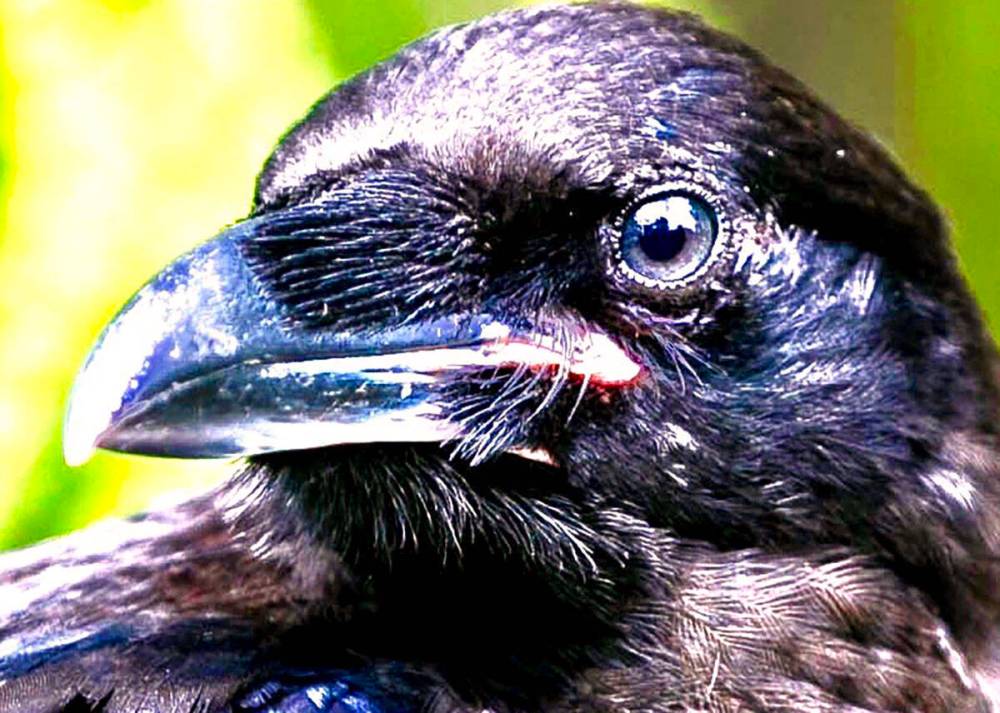
Ken Kingdon sings the praises of the raven. (File)
Which is why I always settle on being a raven. During the frigid days of January they are one of the few animals you can see moving about, flying in the bitterest winds. Not even the coldest parts of the country are off limit to them, as they spend the winter as far north as Baffin Island. They are tough.
Additionally, the upsides to being re-incarnated as a raven are many. First of all, they are relatively long-lived, especially for a bird, with some living more than 20 years in the wild and 40 years in captivity. As a raven, you can also pretty much eat anything you like.
While science frowns upon ascribing human emotions to animals, I’ll even say they enjoy life, playfully doing barrel-rolls and dives while soaring overhead. They create life-long bonds with their mates, establishing and protecting territories while excluding other ravens from these areas.
Which brings up an example of their intelligence, and their communication skills. Ecologists have found that if the resident ravens find a good food source nearby, such as a dead deer, they will remain quiet so as not to draw attention to the area.
However, other non-resident ravens, upon discovering the same food source, will begin “calling” for others to join them. It is assumed that they understand that, while a single raven might not be able to stand up against the resident pair, a gang of ravens can usurp the kill site. Smart and sassy.
Socially, ravens are quite adaptable, and can tolerate living in crowds. If you visit an old-style garbage dump, which admittedly are getting rarer to find, you can find tens if not hundreds of ravens hanging out together, sharing in the bounty of food scraps.
These unpaired ravens roost together in large groups too. On several occasions I have come across winter roosting spots located in thick patches of spruce, where the foliage offers protection from the wind and the overhead branches provide insulation.
While rare to find, ravens aren’t the greatest at keeping these sites secret. At sundown, watch for small groups of ravens flying in a single direction, indicating where to start your search.
Zeroing into patches of dense forest, you’ll know you’re close to a roost when you hear the ravens squawking and muttering to each other high in the trees as they presumably jostle for the best spot under the forest canopy. Occasionally, a raven must trespass into some other bird’s space, as there will arise a great screeching and flapping of wings, but soon calm and quiet prevails again as the night darkens.
While ravens are now quite common locally, historically being a raven has had more ups and downs than their flight paths. Two hundred years ago, naturalists reported seeing ravens throughout the grasslands, feeding on dead bison and other carrion.
Life got harder as the bison disappeared and, to add to their woes, ravens were highly susceptible to being killed by traps and poison placed at bait sites aimed at killing wolves and coyotes. As a member of the much-maligned crow family, they were also regularly shot as nuisance animals. The result was that ravens were uncommon in agriculture portions of Manitoba by the 1950s.
With the changing times, ravens are expanding their range once again. With reduced persecution, plus the ongoing availability of food in the form of dead deer on the side of the road, choice and varied menu items on livestock farms and abundant plastic garbage bags in urban centres, ravens are once again making the prairies home.
And while the population has expanded every winter for quite some time, as young birds temporarily leave their boreal forest homes, some ravens are claiming territory on the prairies all year round. Raven nests are now relatively common in patches of farm bush, and even on hydro structures in treeless areas.
I recognize that I often choose to write about animals that others find objectionable, including ravens and wolves. I guess I just like an underdog. However, if you share my passion for ravens, I highly recommend reading “The Raven in Winter” by Bernd Heinrich. It’s an easy read, filled with facts, lore and great anecdotes.
And if I have swayed you to looking at ravens in a new light, I’m glad you’ve joined the pro-raven club. After all, the Vikings, the Haida and Edgar Allen Poe can’t all be wrong!
And one final note related to my last article on cats. I received a note from Annabelle Pirie from Strathclair who pointed out that one thing that does separate individual cats is personality. I can’t argue with that, as I have encountered many different cats and few have been identical. In fact, some are very, very, memorable. Rest in peace Clyde, you six-toed wonder …
» Ken Kingdon lives in the heart of the Riding Mountain Biosphere Reserve. Send him a text at 204-848-5020 if you have stories to share.