
NDP set to pass 52 bills as third year of term ends
Advertisement
Read this article for free:
or
Already have an account? Log in here »
We need your support!
Local journalism needs your support!
As we navigate through unprecedented times, our journalists are working harder than ever to bring you the latest local updates to keep you safe and informed.
Now, more than ever, we need your support.
Starting at $15.99 plus taxes every four weeks you can access your Brandon Sun online and full access to all content as it appears on our website.
Subscribe Nowor call circulation directly at (204) 727-0527.
Your pledge helps to ensure we provide the news that matters most to your community!
To continue reading, please subscribe:
Add Brandon Sun access to your Free Press subscription for only an additional
$1 for the first 4 weeks*
- Enjoy unlimited reading on brandonsun.com
- Read the Brandon Sun E-Edition, our digital replica newspaper
*Your next Free Press subscription payment will increase by $1.00 and you will be charged $20.95 plus GST for four weeks. After four weeks, your payment will increase to $24.95 plus GST every four weeks.
Read unlimited articles for free today:
or
Already have an account? Log in here »
WINNIPEG — Year 3 of the NDP government’s four-year mandate ended Thursday with more than 50 bills expected to become law and two that didn’t make it to the finish line.
“We’re on the final stages of passing 52 amazing bills,” government house leader Nahanni Fontaine said after the final question period of the 43rd legislature.
Most were passed before the house rose for the summer break, including getting rid of the provincial sales tax on pop, chips and packaged foods that took effect July 1. A handful of health-care bills that aim to restrict mandatory overtime, create a patient safety charter, establish nurse-to-patient ratios and do away with sick-note requirements for employees — unless they miss more than seven consecutive days or 10 in a year — were also passed.
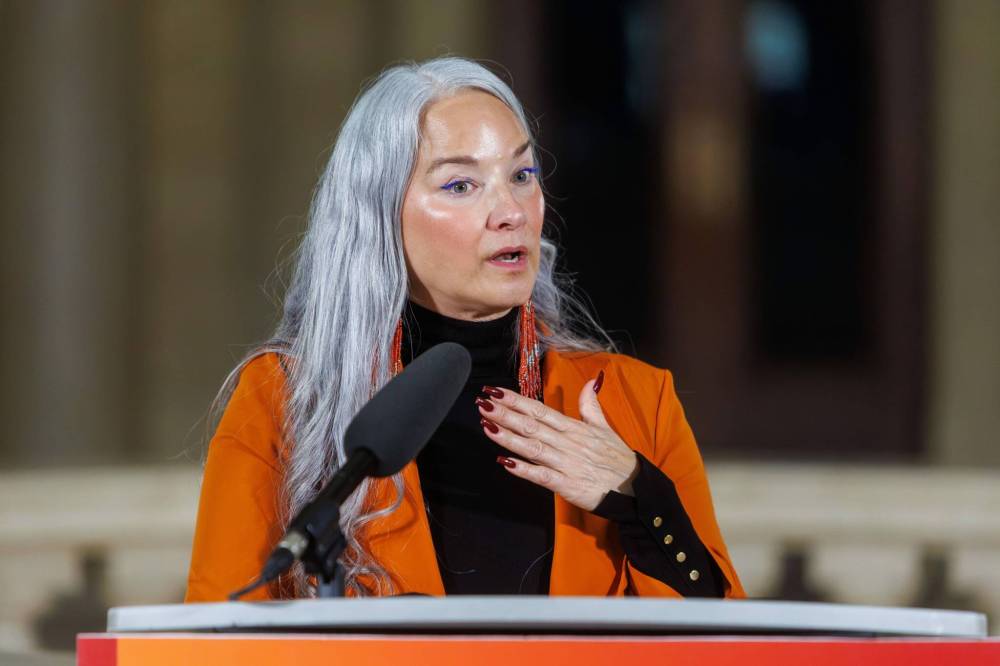
Families Minister Nahanni Fontaine, who is government house leader, scrums with the media after question period in the Manitoba legislature on Tuesday. (Mike Deal/Winnipeg Free Press)
Under rules of the legislature, the Progressive Conservatives held back three government bills until the fall session to allow for further debate before passage by the NDP majority Thursday. The most contentious was Bill 13, the Residential Tenancies Amendment Act, that aims to strengthen renter protections and increase maximum fines for landlords in breach of the act.
The premier announced on Oct. 20 that the government planned to go even further in order to ensure that above-guideline rent increases can’t take effect until the Residential Tenancies Branch reviews and approves them.
On Wednesday, Bill 59, the Residential Tenancies Amendment Act (2), was introduced by the NDP government on the eve of the session wrapping up. In order for it to pass, it required agreement of the Tories to fast-track it through the legislative process. They denied the government’s request.
“Bill 59 was dropped on the floor of the legislature here mere hours before” end of session Thursday night, PC house leader Derek Johnson told reporters outside the legislative chamber.
“The point of that mismanagement was to not be accountable to Manitobans. Manitobans deserve to be heard at committee.”
He said when the original renters’ bill was introduced in March, more than 100 presenters appeared at committee, many of whom were landlords expressing concerns about covering repair and renovation costs and discouraging new rental construction.
The government didn’t include the section on delaying above-guideline rent increases in the legislation.
When asked why, Fontaine — who is also families minister — said that “getting bills right” sometimes takes more time.
“Sometimes you realize that you’ve got to strengthen this or tweak this, or you meet with folks and you understand the concerns of community or business or whatever it may be,” she said.
Last Friday, Fontaine walked back amendments to Liberal MLA Cindy Lamoureux’s private member’s bill, the Autism Strategy Act, to include adults as well as children after public outcry.
“We’re a listening government,” Fontaine said at the time.
Premier Wab Kinew’s trumpeted Manitoba-Crown Indigenous Corporation Act, meanwhile, was not introduced after some First Nation organizations expressed concerns about jurisdiction and the province’s role in their relationship with the Crown.
“We’ve been very consistent over the last three years,” Fontaine said when asked Thursday about its fate. “It is a priority of our government to have those good relationships and those discussions with leadership, with community, in community and will continue to do so,” she said.
Interim PC leader Konrad Narth said the NDP’s legislative agenda fell short.
“There aren’t any bills that are making a difference to the issues that are of importance to Manitobans — improving affordability, growing our economy, improving health-care delivery and improving safety for our communities,” Narth said.
Wednesday’s civic election results show many Manitobans aren’t satisfied with the governing status quo, he said.
“They’re expecting accountability, and they’re expecting that governments — both local and provincial — are able to address the concerns that are fundamental to them,” he said.
The next legislative session begins Nov. 17 with the speech from the throne.
» Winnipeg Free Press