
Former Wheat King Borsheim dies at 47
Advertisement
Read this article for free:
or
Already have an account? Log in here »
We need your support!
Local journalism needs your support!
As we navigate through unprecedented times, our journalists are working harder than ever to bring you the latest local updates to keep you safe and informed.
Now, more than ever, we need your support.
Starting at $15.99 plus taxes every four weeks you can access your Brandon Sun online and full access to all content as it appears on our website.
Subscribe Nowor call circulation directly at (204) 727-0527.
Your pledge helps to ensure we provide the news that matters most to your community!
To continue reading, please subscribe:
Add Brandon Sun access to your Free Press subscription for only an additional
$1 for the first 4 weeks*
- Enjoy unlimited reading on brandonsun.com
- Read the Brandon Sun E-Edition, our digital replica newspaper
*Your next Free Press subscription payment will increase by $1.00 and you will be charged $20.95 plus GST for four weeks. After four weeks, your payment will increase to $24.95 plus GST every four weeks.
Read unlimited articles for free today:
or
Already have an account? Log in here »
Former Brandon Wheat Kings player Les Borsheim died Tuesday at 47.
As a tribute, here’s the profile on Borsheim that ran in The Brandon Sun on Jan. 29, 2019 as part of the Wheat Kings alumni series.
Les Borsheim’s life isn’t what he once would have imagined, but the former Brandon Wheat King remains grateful for all he’s been able to see and do.
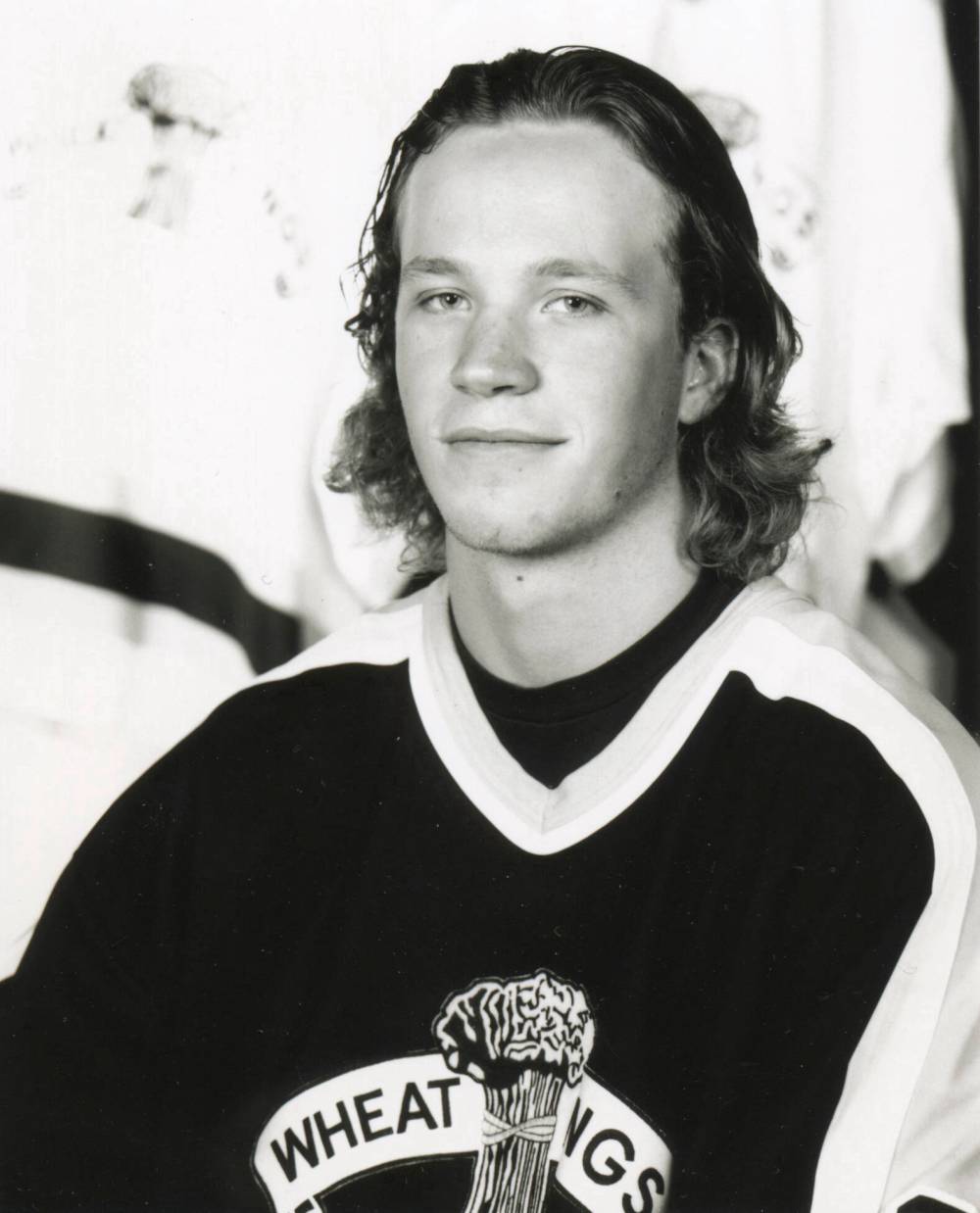
Les Borsheim is shown in 1996, 1997 and 1999 in his official Brandon Wheat Kings pictures. (Brandon Sun File)
Now 39, Borsheim was badly injured in a 2008 motorcycle accident that has left him in a wheelchair. He can still find the blessings around him.
“Obviously everything happens for a reason is the old saying,” Borsheim said. “From every tragedy breeds something beautiful.”
Borsheim grew up on a farm about 30 kilometres outside of Watrous, Sask., a community of 1,800 people located 110 kilometres southeast of Saskatoon.
He started skating around age four or five. His late father Con coached him, and his half brother, one of two who were much older than him, played with the Humboldt Broncos.
“Hockey was in our blood obviously,” he said. “It was a focal point for our family.”
He played his minor hockey in Watrous, until he began making the longer trip to play bantam AA in Humboldt at age 14.
“The sacrifice for hockey parents even now is huge,” Borsheim said of his father and mom Margie. “It’s pivotal for any kids’ hockey career growing up.”
He said it was when he began playing midget AAA that he realized that he might have a future in the game.
Borsheim, who would occasionally go to Saskatoon Blades games and had good awareness of the Western Hockey League, went unselected in the 1994 bantam draft.
He attended a Moose Jaw Warriors spring camp, but was listed soon after at age 16 by Brandon’s former head scout Al Macpherson.
He remembers his first impression of the organization.
“You see some of the names who have played for Brandon, and when you get listed that summer you wonder how you’re going to be able to keep up to those players,” he said.
He played one final season of midget as a member of the Tisdale Trojans before making the Wheat Kings as a 17-year-old for the 1996-97 season.
He joined a Brandon team that had won the league a season earlier, and had returned a significant number of players.
“You’re in awe of them,” Borsheim said. “You watch them and then come in and we were the top-ranked team from the start because of the success they had the year before. Everything is going over your head almost because you’re so young and naive and don’t realize the situation you’re in almost. You’re just happy to be there.”
Borsheim said competing and practising with players of that ability helped him to improve a lot.
In that first season, the right winger played in what would prove to be a personal high of 55 WHL games, scoring eight goals, adding four assists and earning 80 penalty minutes.
He said that first season in the WHL was definitely a transition year both on and off the ice.
“It’s a lot of hockey and a lot of sacrifice,” Borsheim said, noting the shortest road trip is the 360-km journey to Regina. “You would get off the bus sometimes at 6 or 7, sleep for a couple of hours, go to school and then practise at noon or 1 p.m. … It was a hard balance as a young man, and looking back, it matures you quite a bit obviously because of the responsibilities you have.”
At six-foot-two and 195 pounds, he had good size and brought a physical edge. He also fought as needed.
“All those guys who are enforcers say their first fight in junior hockey was tough,” Borsheim said. “They had no idea it was going to be something they were good at. It happened and then you realized it was a skill you had. Back then, obviously in hockey it was a big role.”
He admitted sometimes it was hard to sleep before games if he knew a particularly tough customer was visiting Brandon that night.
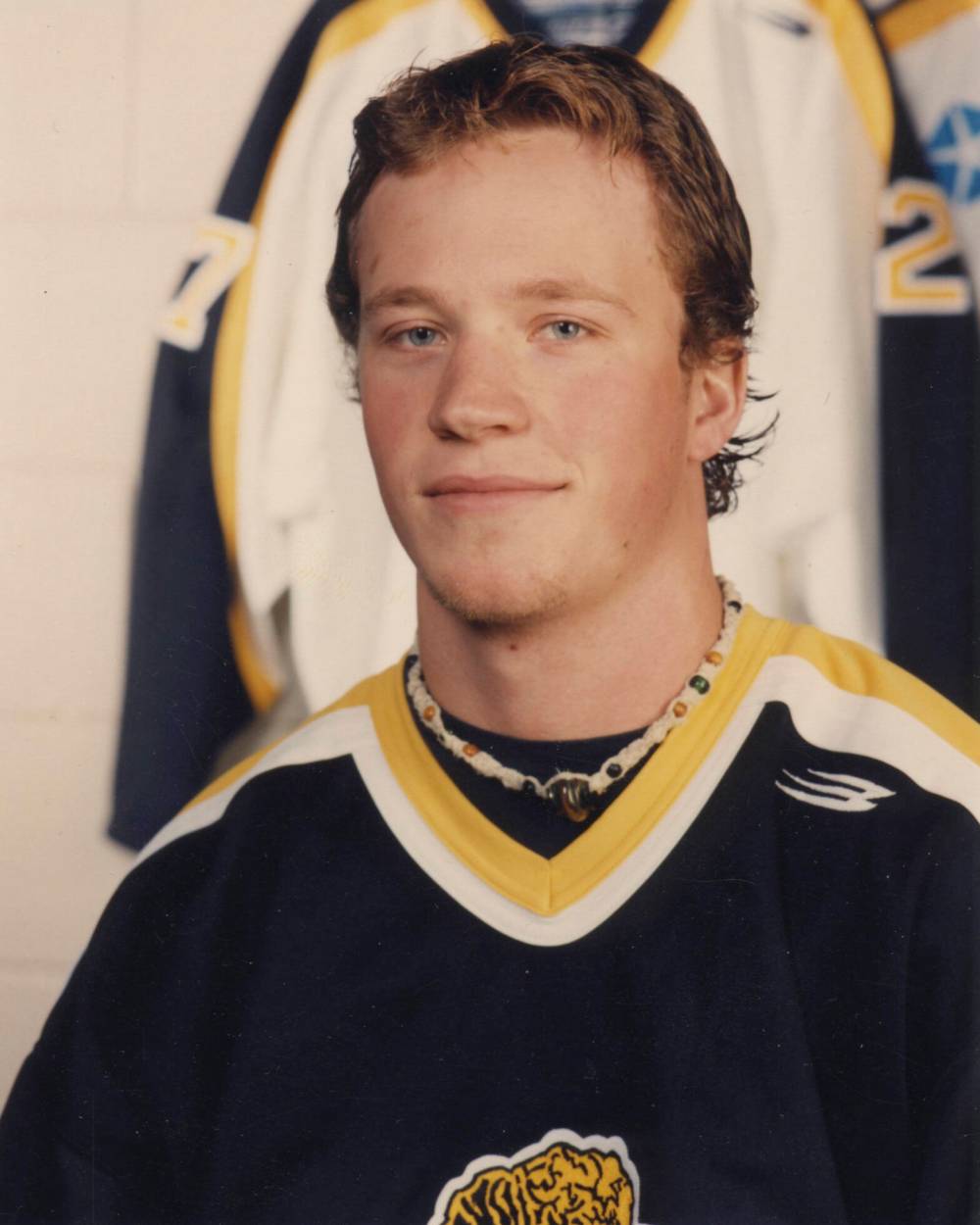
Les Borsheim is shown in 1999. (Brandon Sun File)
It would occasionally prove very costly.
In his first season, he was knocked out in a fight by Red Deer Rebels tough guy Stephen Peat and suffered a concussion, costing him time in the lineup. With the benefit of hindsight, he’s thankful the team wouldn’t let him play.
Late in his second season, Borsheim was moved back to the blue-line, a position he had played in minor hockey. He joined a deep and talented defensive corps that included Burke Henry, Dan Tetrault, Wade Skolney, Andrei Lupandin, Scott McCallum, Andrew Kaminsky and Johnathan Aitken.
“They were very skilled defencemen,” Borsheim said. “I remember the year we went to the final (in 1998), Johnathan Aitken was my defensive partner. He was an eighth-overall pick by the Boston Bruins and a big boy. He played a physical game and they paired me with him, and most nights our job was to shut down the first line of the opposition. Playing with him and having that experience gave me confidence from being in that situation and given that role. It really helped me to grow that year.”
Borsheim also enjoyed a good relationship with Bobby Lowes, saying if a young player could weather the emotional and physical strain of playing for a demanding head coach, he would thrive.
“I really am thankful for what he gave me as a man,” Borsheim said. “Moving on through my whole professional career, it made me a lot mentally stronger.”
Borsheim also appreciated assistant coach Mark Johnston, who was considered the good guy in the good guy-bad guy dynamic of the coaching staff, and also general manager Kelly McCrimmon.
McCrimmon, now the team owner, works as the assistant general manager with the National Hockey League’s Vegas Golden Knights.
“He has a phenomenal hockey mind, with what he is doing in Vegas,” Borsheim said of McCrimmon. “He’s a guy who really cares about his players as well … I owe him a lot.”
In his third season, Borsheim simply didn’t have the passion for the game anymore and decided to leave the team. McCrimmon told him he could return when he was ready, and when Borsheim realized he really missed it, he came back later in the year.
In his final junior season in 1999-2000, shoulder and knee issues restricted him to just 31 games in a star-crossed year for the club as they were beset by injuries.
In his four seasons, he played 157 regular season games, scoring 15 goals, earning 28 assists and piling up 372 penalty minutes. He loved his time with the club.
“It’s the tradition they have and the winning reputation and the front office and the players,” Borsheim said. “And just the Keystone (Centre), the heartbeat of Brandon. In the winter, the Keystone and Wheat Kings hockey are a really big deal. It’s similar in other cities in the WHL obviously, but their passion for the hockey and the fans being really smart about the game made it a really fun arena to play in.”
After a season with the University of Calgary Dinos in 2000-01, Borsheim left the game for a full year and was working as a bouncer in a bar.
“I was hanging around the wrong people at the time,” Borsheim said. “I woke up one morning and realized I had to change my life and my path. I wanted to play hockey again after missing a year so I called up Kelly McCrimmon.”
McCrimmon called former Kamloops Blazers coach Don Hay, who was then on the bench with the American Hockey League’s Utah Grizzlies, and secured him a tryout.
Borsheim played that season at a level lower with the Central Hockey League’s Oklahoma Blazers, starting a six-year professional career that included 16 games in the AHL.
He played his three final pro years with the CHL’s Colorado Eagles, becoming a fan favourite as he racked up 338, 229 and 145 minutes in penalties. Borsheim also collected a CHL title in 2007 when the Eagles beat the Laredo Bucks in six games to win the Ray Miron President’s Cup.
“It doesn’t matter what level it is, it’s fun to win that many hockey games and go through that many hockey teams and have success at the end of the year and raise the trophy above your head like the Stanley Cup,” Borsheim said. “Thankfully both of my parents were in the stands that night with all of the sacrifices they made for me to play hockey to allow me to have that career.
“That was one of the biggest thing for me when I raised the Cup above my head, was knowing they were in the stands.”
His life changed for good on June 1, 2008.
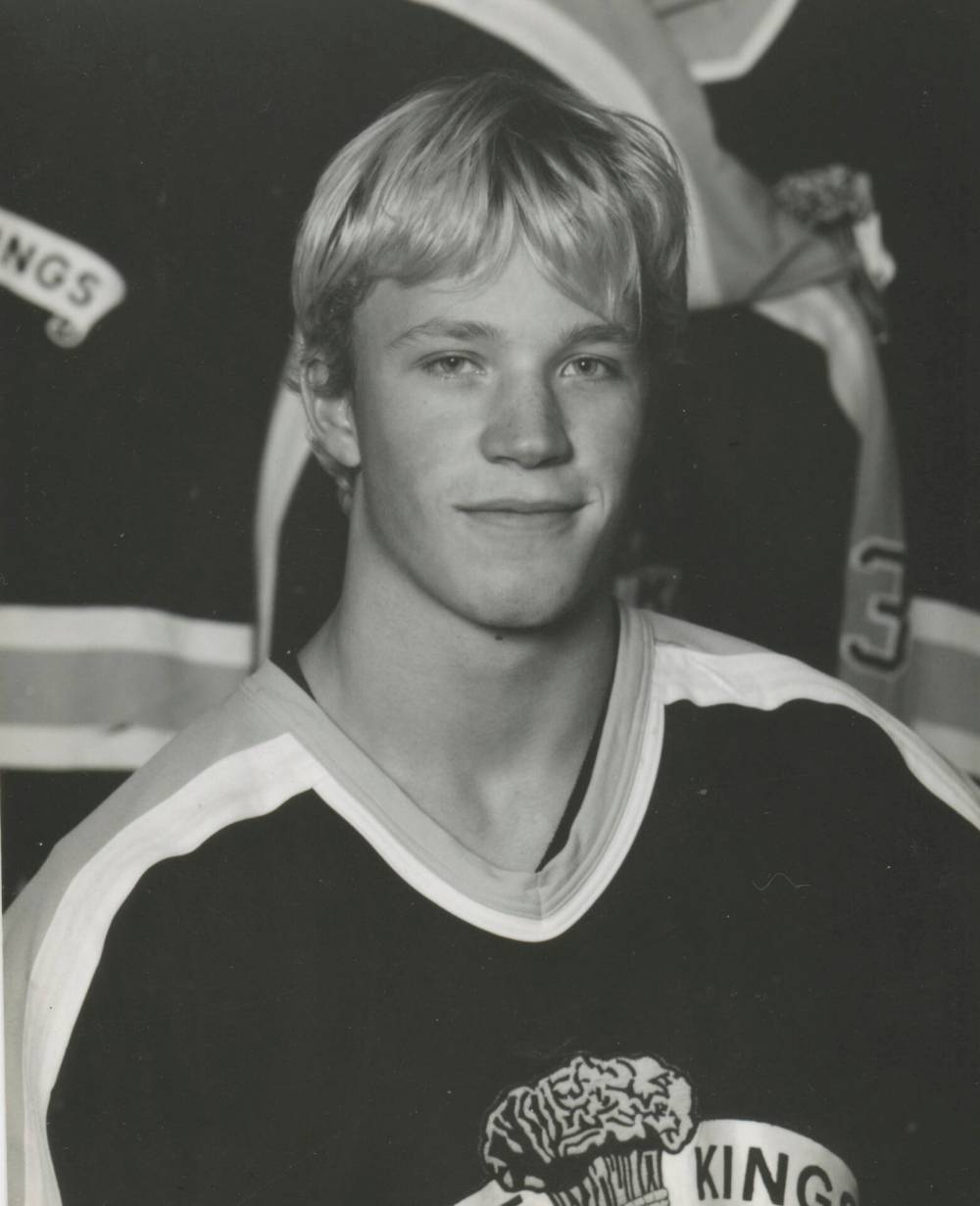
Les Borsheim is shown in 1997. (Brandon Sun File)
Borsheim went for a motorcycle ride with some friends, and failed to make a right-hand curve on Weld County Road 60.5 and was thrown from the bike, according to police. (He doesn’t remember the accident.)
He ended up in hospital in critical condition near death. He suffered fractures to his C4 and C5 vertebrae that left him paralyzed, and also had brain trauma.
Borsheim spent three-and-a-half months in hospital, before moving back into his refitted apartment in Windsor, Colo.
The team, the fanbase and the community rallied around him, with the Eagles presenting him a cheque for $100,000 from a celebrity golf tournament.
They’ve continued to stage the Team Borsheim golf tournament to help him out.
“If it’s going to happen, that’s been a blessing,” he said. “The team and the community down here hold a golf tournament where they raise money so that I can afford to go down to physical therapy in Denver specialized for people who are in wheelchairs and paralyzed. They’re so generous.”
He said the way the community and team have rallied around and supported him has been an eye-opener and a remarkable gift to his life.
He originally had a power chair because he could only move his left hand, but now has limited use of both arms and is in a manual wheelchair.
His legs shake, but he has controlled movement in his right leg. He can wiggle his toes on both feet but it’s definitely limited.
He’s managed to stay involved with the team. Initially he would do a segment between periods on each home game, and three years later it evolved into doing colour commentating on radio for the Eagles, who began playing in the American Hockey League this season.
“It’s a seamless transition into something where it’s very easy to be involved in the sport I love,” Borsheim said. “You roll up here with the headset on and talk about the game. Providing insight from a player’s point of view is the colour man’s job. It’s been fantastic now, especially that we’ve moved up to the (AHL) level.
“I really enjoy it and look forward to doing it. It’s a passion that I’ve been able to keep in my life, even though I’m doing it from a wheelchair.”
This season he’s had a chance to watch his first former Wheat King in an Eagles jersey, Brandonite Ty Lewis. They’ve said hello in passing but haven’t yet had a chance to discuss their common Wheat King experiences.
“I love this sport and to still be involved at this level is pretty incredible,” Borsheim said. “It’s meant a lot to me.
He’s stayed close with some of his former Brandon teammates, including Brett Thurston, who he also played with in Colorado. Others include Stefan Cherneski, Randy Ponte and Burke Henry.
He remains grateful for the time he spent in the Wheat City.
“Looking back, to be able to do that for four years and gain confidence in front of the fans and the community, it’s something that I truly miss,” Borsheim said. “Everyone says they’re happy to play junior hockey where they did but Brandon, with the people I got to learn from and play with and the characters, it’s something that I’m always going to be thankful for.”
» pbergson@brandonsun.com