
Proposed cell tower policy changes worry some
Advertisement
Read this article for free:
or
Already have an account? Log in here »
We need your support!
Local journalism needs your support!
As we navigate through unprecedented times, our journalists are working harder than ever to bring you the latest local updates to keep you safe and informed.
Now, more than ever, we need your support.
Starting at $15.99 plus taxes every four weeks you can access your Brandon Sun online and full access to all content as it appears on our website.
Subscribe Nowor call circulation directly at (204) 727-0527.
Your pledge helps to ensure we provide the news that matters most to your community!
To continue reading, please subscribe:
Add Brandon Sun access to your Free Press subscription for only an additional
$1 for the first 4 weeks*
- Enjoy unlimited reading on brandonsun.com
- Read the Brandon Sun E-Edition, our digital replica newspaper
*Your next Free Press subscription payment will increase by $1.00 and you will be charged $20.95 plus GST for four weeks. After four weeks, your payment will increase to $24.95 plus GST every four weeks.
Read unlimited articles for free today:
or
Already have an account? Log in here »
The Canadian government has proposed a list of policy changes to make cell towers easier to install, which has roused concern in a Brandonite and safe technology advocate who helped overturn a cell tower plan on 34th Street last year.
Chris Bird, a resident in west Brandon, and Marg Friesen, a Winnipegger, said that they are worried about proposed amendments introduced this year by Innovation, Science and Economic Development Canada. Friesen said the list of proposed changes stands to disempower residents and local government when it comes to the placement of cell towers in their communities.
“The problem is that it’s going to diminish and sometimes completely eliminate local say,” Friesen said. “We are concerned because, if this goes through, people like me who know some of the science, and have some depth, won’t be able to advise people or make suggestions.”
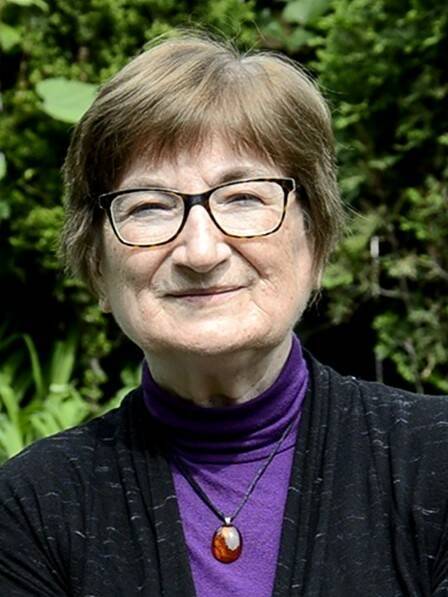
LEFT: Marg Friesen, a retired research biologist who volunteers for Canadians for Safe Technology. Friesen attended a Brandon council meeting in 2025 to speak against a proposed cell tower, which was cancelled at that meeting. (Supplied) RIGHT: Brandon resident Chris Bird in 2025 at a council meeting speaking in opposition to a cell tower being built in his neighbourhood. (Alex Lambert/The Brandon Sun files)
Friesen, who volunteers with Canadians For Safe Technology, last year spoke against the cell tower proposal at 1009 34th Street in Brandon. Council voted down the tower at that meeting in front of a crowd of roughly 40 residents.
While there have been concerns, a cell tower proponent said ISED’s policy proposals stand to fix problems that have made it more difficult to establish essential wireless coverage in Canada, and noted that misinformation can fuel pushback about towers.
ISED released proposed amendments to its tower siting process this year, including: eliminating the requirement for cell tower companies to notify the public when a tower is being planned that is less than 15 metres tall; eliminating the requirement to directly mail residents informing them a taller tower has been proposed near their home; shortening the period of time that residents can submit feedback; and removing the complaint of “visual impacts” from the list of objections that can be made against a tower proposal in a community.
Proposals have also been introduced to modernize and streamline consultation with the public through an online portal process, and limit feedback from residents to a radius of three-times the height of the tower.
The amendments were proposed to reduce the regulatory and administrative burden for cell tower proponents, and to streamline existing processes, ISED said. It followed the federal government’s 2025 Red Tape Review, which sought to identify barriers to investment and growth in the Canada.
“ISED expects that operators will see reduced costs associated with regulatory compliance and a more efficient environment in which to invest and expand networks while continuing to promote transparency, efficiency and service continuity,” ISED wrote on its web page about the amendments.
Friesen, who has a masters of science degree in entomology and toxicology, and worked a 30-year career for the federal government, including research in ecosystem toxicology, said human health is at risk if cell tower policies are softened. She said cell tower technology has advanced to the point that it affects human health, but safety regulations are lagging in Canada and failing to protect residents against the growing risk.
“How can Health Canada say there’s no risk? It’s obvious that there is,” Friesen said. “There are problems, and we’re talking about cancer, neurological effects, reproductive effects.”
Friesen said that she believes the ISED is “turning a blind eye” to emerging science that raises questions about the safety of modern wireless technology. She compared it to the period before cigarettes and asbestos were officially declared carcinogenic.
“There are literally thousands of studies, hundreds of high-quality studies which show adverse effects, but they’re turning a blind eye. They’re saying, ‘None of those studies is good enough. They’re all flawed,’” Friesen said. “We know that there’s a lot of evidence indicating that this radio frequency radiation emission should be a known carcinogen.”
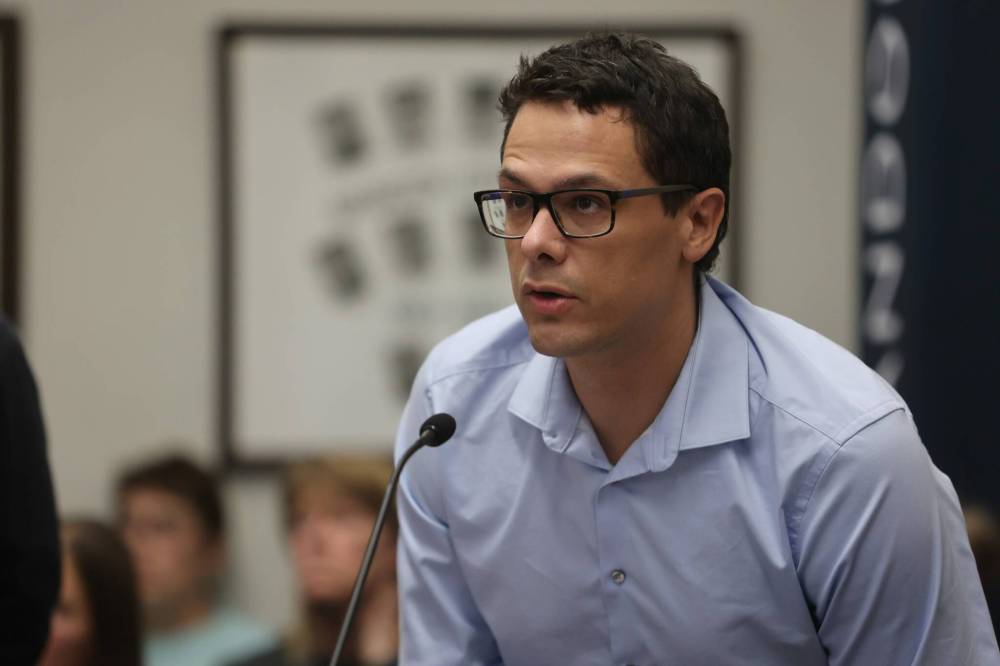
Brandon resident Chris Bird in 2025 at a council meeting speaking in opposition to a cell tower being built in his neighbourhood. (Alex Lambert/The Brandon Sun files)
Friesen said Canada’s regulations should be tightened.
The federal government’s web page that discusses Canada’s regulations of 5G and radio frequency exposure, called Understanding Safety Code 6, states that “the vast majority of research to date does not support a link between radio frequency EMF exposure and cancers in humans.” The page acknowledges that an arm of the World Health Organization identified radio frequency EMFs as “possibly carcinogenic to humans” in 2011, and agreed that “additional research in this area is warranted.” It does not discuss the possibility of fertility or neurological effects. It was last modified in 2024.
Brandonite Chris Bird, who successfully led a campaign to have a tower cancelled outside his home last year, said in a recent interview that he is concerned with the ISED’s proposal to shorten consultation and feedback periods.
“It just worries me for anybody having to go through it in the future,” he said. “The timelines and the notification (changes), they have such a tight turnaround. I don’t think that they could probably get as much opposition as we did.”
After receiving direct mail about the tower proposal on 34th Street, Bird said he spent more than a week digesting the news, and then a week discussing with neighbours, and then another week knocking on doors to gauge public sentiment. Four weeks had passed since being directly mailed about the proposal before he realized, “Everybody within this vicinity is against it, maybe we should try to oppose it.”
Bird said that he believes the proposed amendments — such as reducing public input to 30 days, and removing the requirement to mail residents informing them of the tower — would make it difficult for the public to get up to speed and involved by the time the deadline passed.
“There’s just a monumental amount of information out there, and you’re trying to sift through it and figure this all out while also working a full time job and raising a family. It’s a lot,” Bird said. “Without the letter, a fraction of the people will even become aware and be able to get any support against it.”
In its proposed amendments, the ISED has proposed that a physical sign be placed on the site of the planned tower, and an online portal be created which citizens could subscribe to for notifications about tower proposals near them.
The proposals also aim to change policy so that cell tower proponents are only required to respond to concerns and questions raised by the public who are located within a radius of three-times the height of the cell tower. Shared Tower vice-president of real estate Cheyenne Zierler said this would address a known problem because long-distance complaints have been a common issue the company faces.
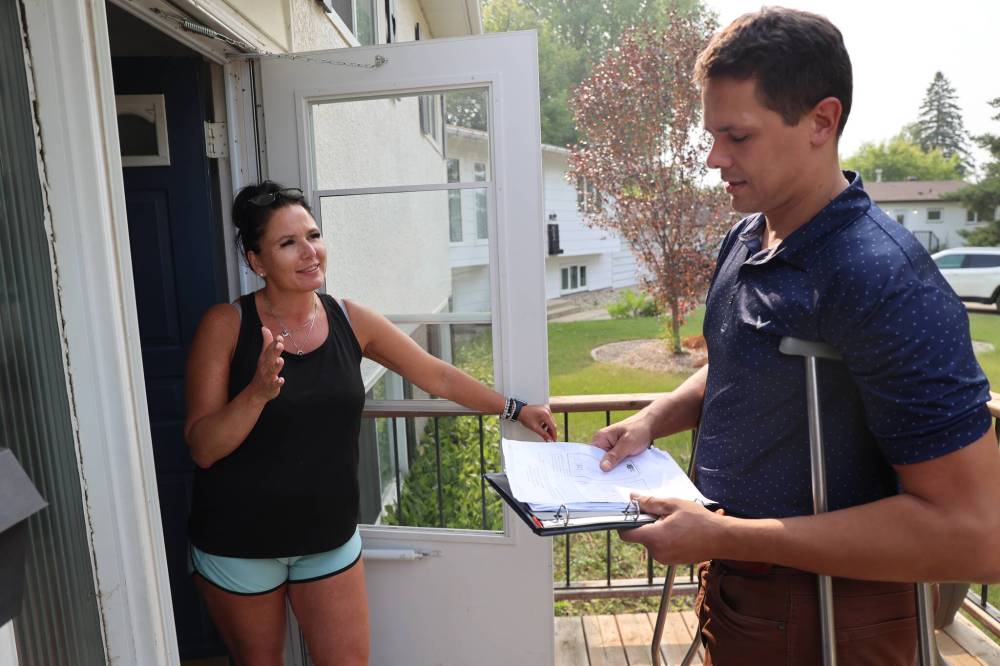
Chris Bird is seen in 2025 as he rallied against a proposed cell tower in his neighbourhood. (McDowell/The Brandon Sun)
“We’ve definitely come across that. We’ve had people reaching out from different countries. We’ve had people reaching out from different organizations that essentially will just follow telecommunication applications across the country and voice their opinions,” Zierler said. “Sometimes with social media, and even misinformation on the internet, it’s really easy for people that might not be in the community itself, or even outside of the country, to be making input on some of the proposals.”
The change to restrict feedback to locals near the proposal would improve the conversation, she said, because it would balance the feedback and help narrow the concerns to those people impacted by the tower proposal.
Local voices have many times expressed a serious demand for wireless coverage, Zierler added.
“There’s many different communities that we have worked in, even with different municipalities themselves and their emergency service departments, where they’ve highlighted it to be a huge safety issue of the community not having access to emergency services,” Zierler said. ”We’ve had whole fire stations come out, their chief and all the firefighters, to support some of these proposals because it’s needed.”
She noted that health concerns are an item that is typically raised in tower applications, and that Shared Tower refers to Health Canada, the ISED and Safety Code 6, which already restricts emissions from cell towers. She added that oftentimes towers are well below the limits prescribed by this regulation, further improving safety measures.
Regarding the proposal to remove “visual impact” as a valid objection to a cell tower proposal, Zierler said that change would be one of the most impactful for Shared Tower. Visual impacts are often cited as an objection to towers, and the company has to work with these complaints, but visual impacts are hard to avoid, she said. There is often today a small area where cell tower applicants are needing to place a tower, and few options to reduce the visual impact.
“We’re kind of in a situation where we have to balance some of those visual impact preferences with the needs of the wireless network, in order for them to actually address the coverage and capacity issues,” she said. “Visual impact is a tough one because obviously we understand that new infrastructure coming into communities is obviously going to be a change. But usually, when we’re proposing the infrastructure, such as the proposal we had in Brandon, we’ve already gone through a process where we’re choosing the type of structure that would have the least visual impact.”
It can also be difficult to find a location for cell towers with low visual impact because towers sometimes need to be added into communities after development has taken place, she said. Residential zones and business zones may be built, and then the need for telecommunications service realized afterward, she said.
“Unfortunately, this type of infrastructure isn’t something that’s at the forefront of municipalities’ minds when they’re going through typical development applications like condos, homes, businesses, that type of thing. So typically, the infrastructure is needing to be placed after everything is already developed, which of course then poses an issue because we can’t create or maximize the distance.”
Ryan Nickel, director of planning and buildings at the City of Brandon, said that it is “good planning practice” to identify tower locations ahead of time. But it can be difficult to make that happen, he said.
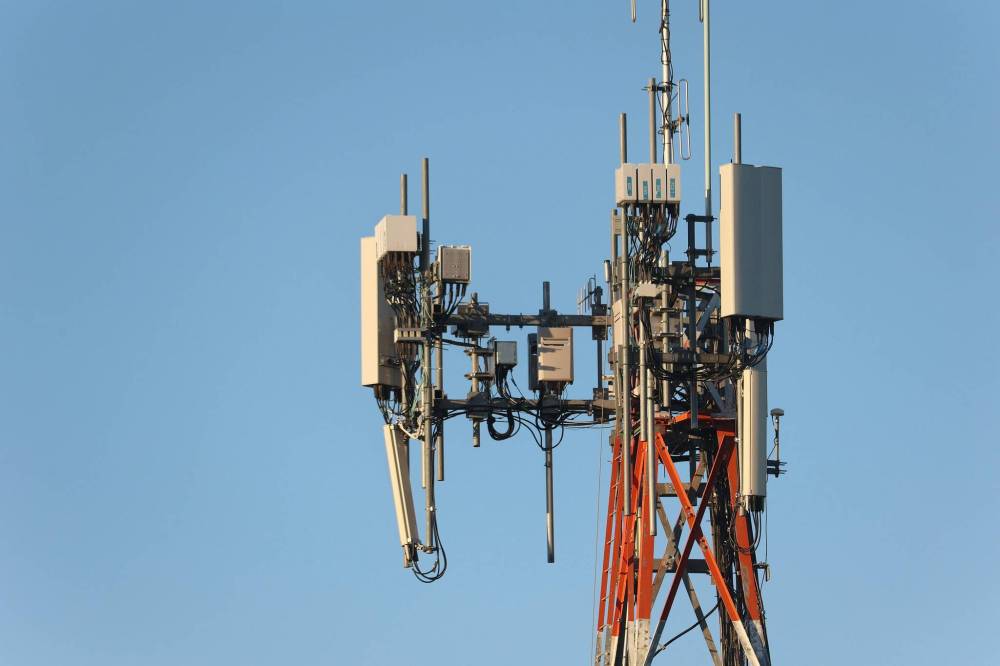
A small cell tower in downtown Brandon on a rooftop. (Connor McDowell/The Brandon Sun)
“Ideally, we would identify them on our plans, and those would be available to residents to see,” Nickel said. “But the disclaimer I want to put in is that is not always possible, just based on the information available when we go through that process.”
Nickel said that it is difficult to co-ordinate far in advance because needs around cell tower coverage can change quickly, and there are varying levels of communication and different business models among all the wireless service providers seeking to establish services in Brandon.
“That doesn’t mean we aren’t going to look into it. We are. But it just means that even sometimes you have the best plans, and there’s still changes later on.”
Municipalities have a limited role in the placement of cell towers either way, Nickel said. He highlighted that the tower on 34th street was proposed on city-owned land, giving the city the option to decline the offer, compared with a proposal on private land.
“The role of the municipality was pretty limited before, and I think it’s still fairly limited,” Nickel said.
» cmcdowell@brandonsun.com